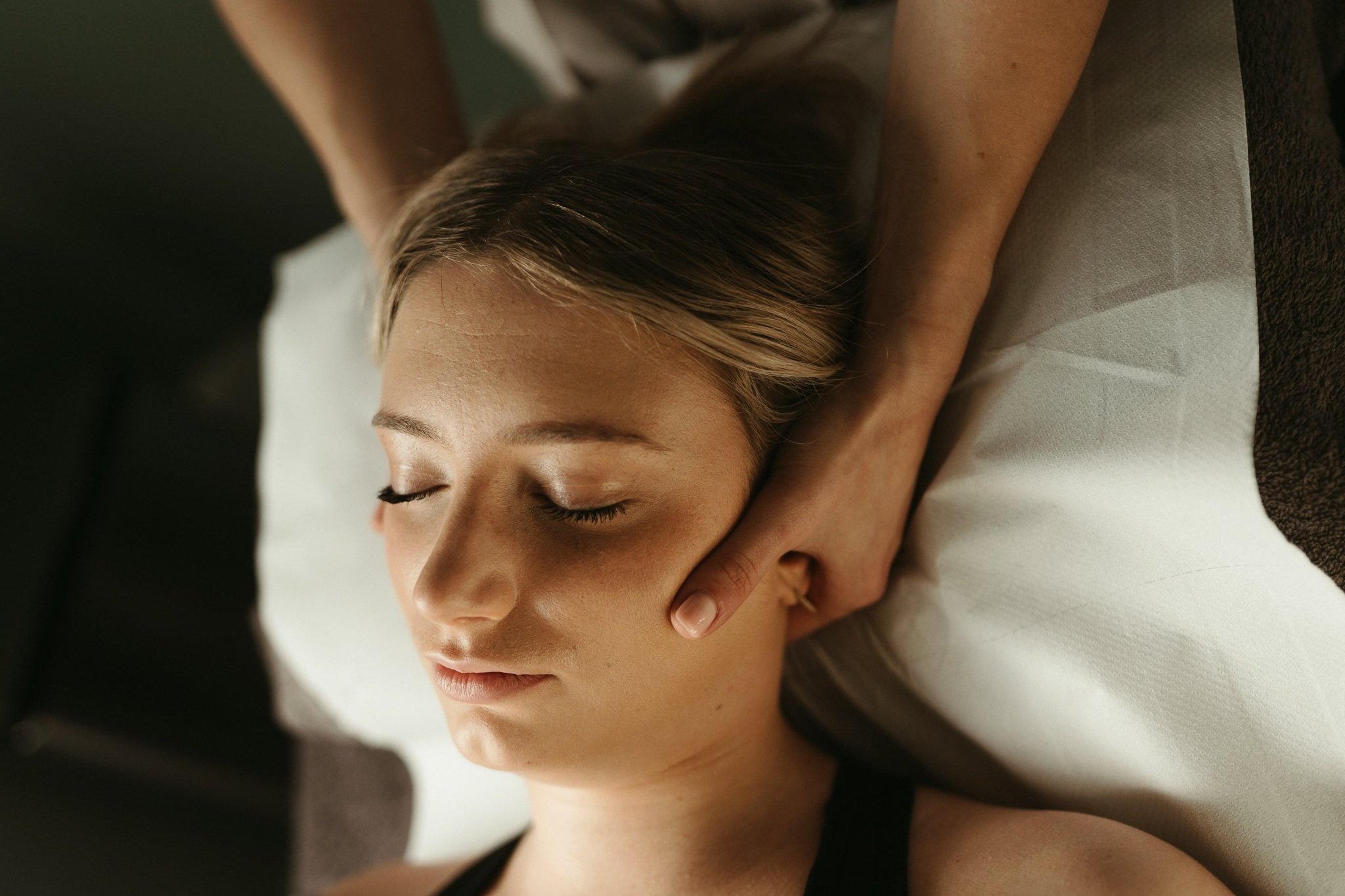
What is Cranial Osteopathy?
Cranial osteopathy is a gentle and subtle form of osteopathic treatment that focuses on the body’s natural rhythms and its ability to maintain balance and health. Like all osteopathic care, it is based on the principle that the structure and function of the body are closely connected, and that the body has an inherent ability to heal and regulate itself.
Using very light touch, cranial osteopaths assess and support the natural movement within the tissues of the body, including the head, spine, and nervous system. Restrictions or tensions within these tissues can affect how the body functions as a whole. Cranial osteopathy works to release these patterns and encourage the body to restore its own balance.
Because the treatment is extremely gentle and non-invasive, cranial osteopathy can be suitable for people of all ages, including babies, children, and adults.
What Can Cranial Osteopathy Help With?
Cranial osteopathy takes a whole-body approach to health. Rather than focusing only on the area of pain or discomfort, treatment considers how different parts of the body are connected and how tension in one area may affect another.
It may be helpful for a range of concerns, including:
Headaches and migraines
Neck and jaw tension
Stress and tension-related symptoms
Digestive discomfort
Sleep disturbances
Postural strain
Recovery after illness, injury, or periods of stress
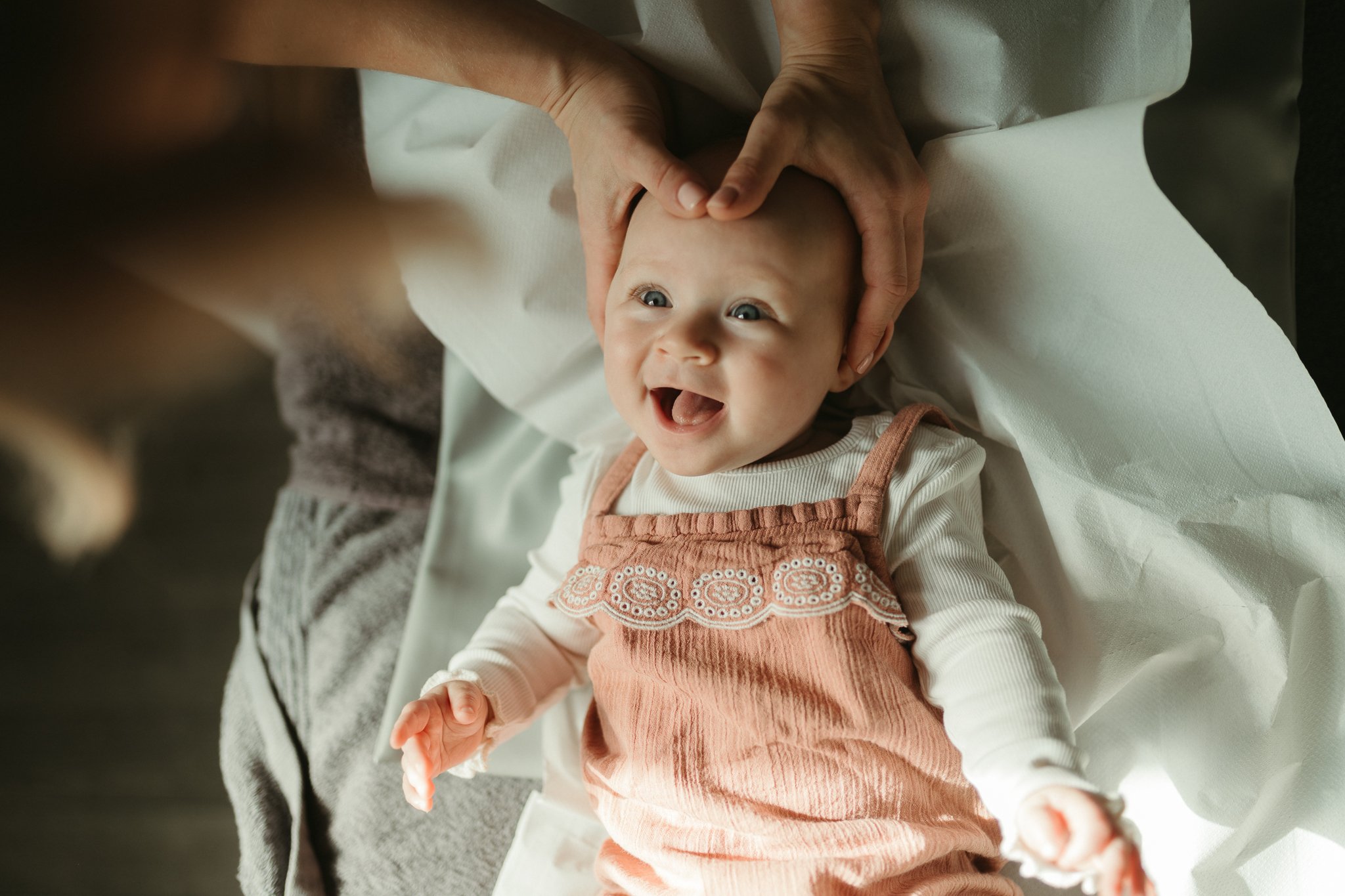
Cranial osteopathy is also commonly used to support babies and children who may be experiencing feeding difficulties, unsettled behaviour, or tension following birth
What to Expect
Your first appointment will involve a detailed case history and examination so your osteopath can understand your symptoms and overall health. From there, a personalised treatment plan will be discussed with you.
Cranial osteopathic treatment involves gentle hands-on contact while you remain fully clothed and comfortably positioned on the treatment table. The touch used is very light and most people find the treatment deeply relaxing.
Some people notice changes immediately, while for others improvements develop gradually over a number of treatments. Your osteopath may also provide advice or exercises to support your recovery between appointments.
“Osteopaths are highly trained professionals skilled in diagnosing health issues, including those that may require further investigation. The first visit to an osteopath will include questions about current symptoms and medical history. All information will be treated as confidential in accordance with the standards of practice set out by the General Osteopathic Council (GOsC) and General Data Protection Regulation (GDPR), May 2018.”
— Institute of Osteopathy

“96% OF OSTEOPATHIC PATIENTS SAID THEY WERE SATISFIED OR VERY SATISFIED WITH THEIR CARE
98% OF PATIENTS SAID THEIR EXPERIENCE OF OSTEOPATHY WAS GOOD OR VERY GOOD
AFTER 1 WEEK, 89% OF PATIENTS REPORT SOME LEVEL OF IMPROVEMENT IN THEIR SYMPTOMS
AT SIX WEEKS, 96% OF OSTEOPATHIC PATIENTS REPORT IMPROVEMENT OR RECOVERY”